欢乐喜剧人
先生たちは幸せ?「誇りはあるのに、人には勧めない…」教員の約6割が抱える“矛盾”が生まれるワケ_我的网站

一 |
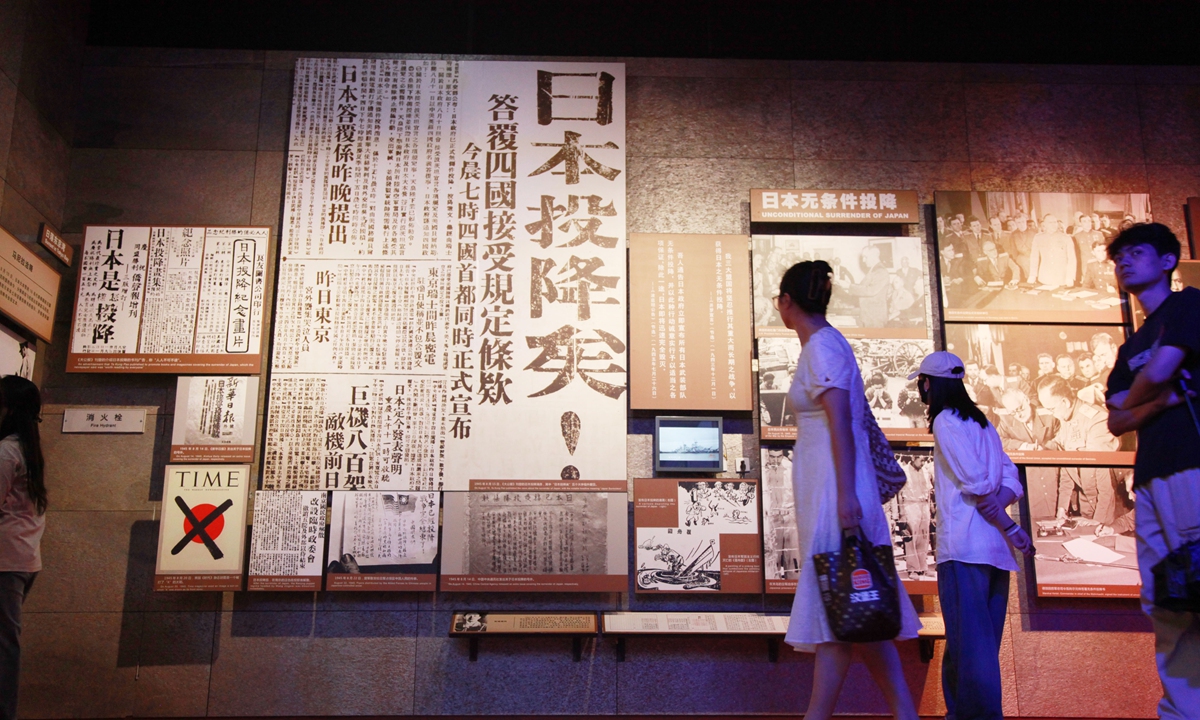
Visitors view exhibits at the exhibition "Justice Will Prevail, Peace Will Prevail, the People Will Prevail—Exhibition on the Victory of the Anti-Fascist War in the China Theater and the Trial of Japanese War Criminals" at the Memorial Hall of the Victims in Nanjing Massacre by Japanese Invaders in Nanjing, East China's Jiangsu Province on August 14, 2026. Photo: VCG
August 15 this year marks the 81st anniversary of Japan's unconditional surrender in World War II. As the main battlefield in the East for the war, China fought a 14-year resistance war at the cost of 35 million casualties. It pinned down the bulk of Japanese military forces and made indelible contributions to the victory of the global anti-fascist cause.
On this significant anniversary, French youth Marcus Detrez, his compatriot Bastien Rata, and Chinese youth Zhong Haosong will donate precious historical archives to the Memorial Hall of the Victims in Nanjing Massacre by Japanese Invaders.
Global Times reporters accompanied the trio throughout their cross-border archival retrieval mission, witnessing firsthand the handover of historical materials collected in Paris and Tokyo to archival institutions and memorial halls in Chongqing, Shanghai and Nanjing.
"Without justice, there can be no true peace," Marcus told the Global Times during his trip from Shanghai to Nanjing on Thursday.
History through multiple perspectivesA landmark handover of historical documents shedding new light on Japan's wartime bombing of China took place on August 10 at the Chongqing Municipal Archives, as Marcus and Zhong donated digital scans of 138 pages of rare materials related to the devastating Chongqing Bombing.
Compiled by Bastien from the Nantes Diplomatic Archives Centre in France, the mostly French-language files—accompanied by Chinese texts and maps—offer an unflinching third-party account of Japanese air raids on Chongqing, Chengdu and other cities between 1938 and 1941. The archives detail exact bombing dates, aircraft formations, ordnance types, civilian casualties and infrastructure destruction.
Of particular note within the archives are the Chinese and French translations of a so-called Statement of the Government of the Empire of Japan. Attached to a letter dated November 1938, the document brazenly demanded that China cease its resistance against Japanese aggression and submit to Japan's so-called "new order in East Asia", threatening military punishment if its demands were rejected.
Marking the 89th anniversary of the August 13 Battle of Songhu, also known as Battle of Shanghai, the historical preservation effort reached another milestone on August 13 in Shanghai, where youth activists presented 891 pages of invasion-era archives to Shanghai Songhu Memorial Hall for the War of Resistance Against Japanese Aggression for further research.
The archives, obtained from the Nantes Diplomatic Archives Centre, include records detailing the dates and locations of Japanese bombing raids on parts of Shanghai during the Battle of Shanghai, as well as the number of aircraft involved. The materials also cover Japan's aggression in Northeast China, the puppet state of "Manchukuo", Japanese atrocities and bombings, with some records also relating to the Soviet Union and the Korean Peninsula.
The third batch of materials, scheduled to be handed over to the Memorial Hall of the Victims in Nanjing Massacre by Japanese Invaders on August 15, was brought back from Japan last week by Marcus, Zhong and others. During their trip, they visited several WWII archival collections and secondhand bookstores in Tokyo, uncovering more than 50 items weighing about 20 kilograms, including pictorials, publications, books and photo albums dating mainly from 1932 to 1945. The materials cover the Nanjing Massacre and Japan's preparations for launching the July 7th Incident, among other topics.
Among the finds was a book titled
The Nanjing Front, which documents events related to the Nanjing Massacre despite not mentioning the massacre in its title. They also found photos taken by Asahi Shimbun of Japanese air raids, as well as images of the Great Wall after it was damaged during the Japanese military's occupation.
"These archives should go where they belong," Zhong told the Global Times.
'Guarded' Japanese collectorsIn France, archival research was a race against time. Bastien told the Global Times that they had only four days to work at the French diplomatic archives in Nantes. Each person could access no more than six boxes a day, or 24 boxes over four days. Some contained as many as 10,000 to 20,000 pages, while only 10 to 20 percent might relate to Japan's war of aggression against China. "We had to go through the pages one by one, quickly identify anything relevant and scan it immediately," Bastien said.
The team then spent nearly a month organizing the material, working about eight hours a day. They also developed an AI-powered system to translate and classify the records and extract information on dates, locations, people and events, while linking the French diplomatic archives with photos and notes left by Marcus' grandfather.
Finding wartime records in Japan posed a different challenge. Much of the material is not publicly catalogued online, so the team had to visit collectors one by one and keep asking specific questions.
"The biggest challenge is that many Japanese collectors are cautious about what we are looking for. Some know these materials exist but choose to avoid the issue, while others have clues but are unwilling to share them," Zhong said.
The team visited one Tokyo collecting institution twice. Despite explaining during their first visit that they were looking for wartime materials from the 1930s and 1940s, the collector initially showed them only ordinary photos of Japanese soldiers. The team then changed its approach, asking why many Japanese WWII records contain gaps concerning China. The collector said Japan generally refers to the conflict as the "Sino-Japanese War," rather than Japan's war of aggression against China. The team pressed further, asking whether there were records related to Shanghai, Nanjing or Chongqing. Only then did previously unseen materials gradually emerge.
The team also cross-checked promising finds with Chinese institutions, including the the Memorial Hall of the Victims in Nanjing Massacre by Japanese Invaders, and traced their provenance. One photo album, for instance, came from the family of a Japanese soldier and still contained the photographer's details and names of people pictured.
Anchoring hard-won peaceIn early August, Marcus and Zhong stood at a busy intersection in Tokyo's Shibuya district, dressed in black and holding Japanese-language banners urging Japan to confront its history of aggression, including the Nanjing Massacre. They spent about three hours raising awareness on the street. Some foreign tourists stopped to ask what had happened, while some Japanese passersby tried to stop them.
There was also support. A Japanese female blogger livestreamed the event, saying she wanted to share the truth and promote peace. Japan's refusal to face its wartime history and apologize, was "irresponsible," she said.
"Our long-term goal is simple: to let the world see the truth of history," they told the Global Times.
Zhao Yongsheng, a professor at the Institute of Regional and International Studies at the University of International Business and Economics in Beijing, said the growing involvement of international friends in uncovering Japan's wartime history and preserving the truth carries unique value. It not only helps safeguard historical truth, but also challenges long-standing Western biases and neglect of the Eastern theater of World War II. More importantly, it demonstrates that exposing wartime atrocities and defending peace and justice are shared moral responsibilities of humanity.
"There are concerns that confronting Japan's wartime past could create new instability in Asia. In fact, the opposite is true," Zhao said. "Germany became a 'stabilizer' in Europe partly because it confronted its Nazi past. In Asia, only by fully confronting Japan's wartime crimes and curbing the ambitions of right-wing forces can the region escape the shadow of militarism and achieve lasting peace and development."
Regarding the newly recovered materials, an official with the Shanghai Songhu Memorial Hall for the War of Resistance against Japanese Aggression told the Global Times that experts will first authenticate the archives before their formal handover. Zeng Jin, deputy director of the Chongqing Municipal Archives, said the materials would complement existing collections and provide new evidence for research through third-party perspectives from foreign governments and societies.
。 精神的な不調で休む教員が過去最多を更新し続けているというニュースを、保護者のかたも目にされたかもしれません。「先生たちは大丈夫なのか」と心配してくださる方もいると思います。

二 |
正直なところ、現場は楽ではありません。ただ、「不幸せだ」と言い切るのも違うのです。今日は、教員の働き方に関する調査データをもとに、担任が感じている「本当のところ」をお伝えします。

三 |
教員の職業生活調査。

四 | 自己成長や貢献で幸せを感じる一方、過重労働が不幸せの主因となっている実態がある。
出典:パーソル総合研究所「教員の職業生活に関する定量調査」
精神疾患による教員の休職者が過去最多の1.3万人超。深刻な人手不足と過重労働の悪循環がある。
出典:東洋経済オンライン「「メンタル不調で休職」が1.3万人、深刻な職業」
「誇りはある」というのは本心です
パーソル総合研究所が行った調査に、興味深い結果があります。教員の「はたらく幸せ実感」は、全国の一般的な正社員よりもやや高かったのです。そして、「はたらく不幸せ実感」は逆に低い。

五 |
これは、私自身の実感とも重なります。日々の仕事の中で、子どもたちの成長に立ち会えること、「先生、わかった!」という表情を見られること。これは、他の仕事ではなかなか得られないものだと思います。調査でも、教員の約6割が「教員であることに誇りを感じている」と答えています。
特に、「新たな学び」「仲間とのつながり」「誰かの役に立っている実感」という3つの要素が、一般の正社員より高いという結果が出ています。

六 | この仕事には、確かに他の職業にはないやりがいがあるのです。
それでも「勧めたくない」という矛盾
けれど、同じ調査の中に、胸が痛くなる結果もあります。

七 | 「教員という職業を近しい人に勧めたいか」という問いに対して、小中学校の教員の約6割が「そう思わない」と答えているのです。
誇りはある。でも、人には勧められない。この矛盾した感覚は、現場を知る教員なら多くの人がうなずくのではないでしょうか。原因ははっきりしています。過重労働です。
文部科学省の調査では、2024年度に精神的な不調で1か月以上休んだ教員は1万3310人で、過去最多でした。在職者に占める割合は1.44%。民間企業の平均0.5%と比べると、約3倍の高さです。行政への報告書作成や保護者対応、部活動の顧問など、教壇に立つ以外の業務が重くのしかかっています。
しかも、休む先生が出ても代わりの人員がなかなか見つからない。

八 | 残った教員で無理やり回すことになり、その中からまた不調者が出る。この悪循環が、多くの学校で起きています。
若手の先生が、一番苦しんでいる
年代別に見ると、精神的な不調で休む割合が最も高いのは20代です。在職者に占める割合は2.21%に達しており、50代以上の約2倍です。また、休職した時点でその学校に勤務して3年未満という人が6割を超えています。
この数字は、現場にいると肌で感じます。

九 | 経験の浅いうちに、授業準備や保護者対応、学級経営を一人で抱え込み、相談する相手も見つからないまま追い詰められていく。そして、結果的に「もう無理だ」となってしまう。近くで見ていると、本当につらいです。

十 |
そして、その若手を支える側の教頭や副校長も、実は余裕がありません。保護者対応やトラブルの仲裁が集中し、業務範囲も不明確なまま、教員の中で最も多忙なポジションになっています。
さいごに
先生たちは、子どもの成長に立ち会えることに喜びを感じています。それは、いまも変わりません。

十一 | ただ、そのやりがいだけに頼って、負担を置き去りにし続ければ、いずれ無理が来ます。そして、先生が倒れれば、その影響を受けるのは子どもたちです。
「誇りはあるけれど、人には勧められない」
この矛盾を少しでも解消していくためには、学校や行政の努力だけでなく、保護者の理解も必要です。先生が元気でいられることが、子どもたちにとっても、一番良い教育環境だと感じています。

十二 |
この記事が役に立ったら、こちらからフォローしていただけると嬉しいです。また、共感いただけた方は、リアクションで応援してもらえると励みになります。

十三 |
ナナホシのおすすめ記事がLINEに届きます︕
忙しいママや先生に知ってほしい教師の試した「教え方」と「子育て術」をまとめてお届けする、ナナホシ「教師の試した教え方と子育て術」が配信中。
毎週火曜日と金曜日の20時00分にお届けします。「子育ての手間を減らしたい」そんな方は、ぜひ友だち追加してください。
<友だち追加の方法>
■下記リンクをクリックして友だち追加してください。

十四 |
LINEアカウントメディア(外部リンク)
※本リンクは「Yahoo!ニュース エキスパート」との取り組みで特別に設置しています。
Current article:http://3xzi7kk.cousizhegaobaolengkuo.bond/list_4k3q1w/lgr90.html
Published on:16:15:17